
Everything it reads is monitored.
We monitor everything the agent does, automatically and with people. If something shouldn't reach the AI provider, we filter it out of the context.
Start with the work your team never gets to.
Tickets keep losing to the roadmap.
Takes tickets, small to large: bugs, features, drivers and CRA reports. Every change is tested on your board.
A pull request with test results, reviewed by a human engineer.
Your engineers lose days on reports they can't reproduce.
Reproduces the report on the bench and measures what happens on the board.
A yes or no, with log, trace and measurements. Real bug? Kilby can fix it next.
"The device restarts when the relay switches."
From your support deskConfirmed: real bug
Nobody has time to flash every change and run regression tests by hand.
Every night Kilby flashes the day's work and runs the regression tests on hardware.
A morning report: what broke, and a proposed fix.
Your specs are a pile of PDFs. No product matches them anymore.
Reads your firmware, tickets and documents, and keeps one spec next to the code. Every change updates it.
One spec in your repo that matches what runs on the product.
One living spec
WORKS WITH JIRA · AZURE DEVOPS · OPENPROJECT
Kilby does the work.
Engineers decide what ships.
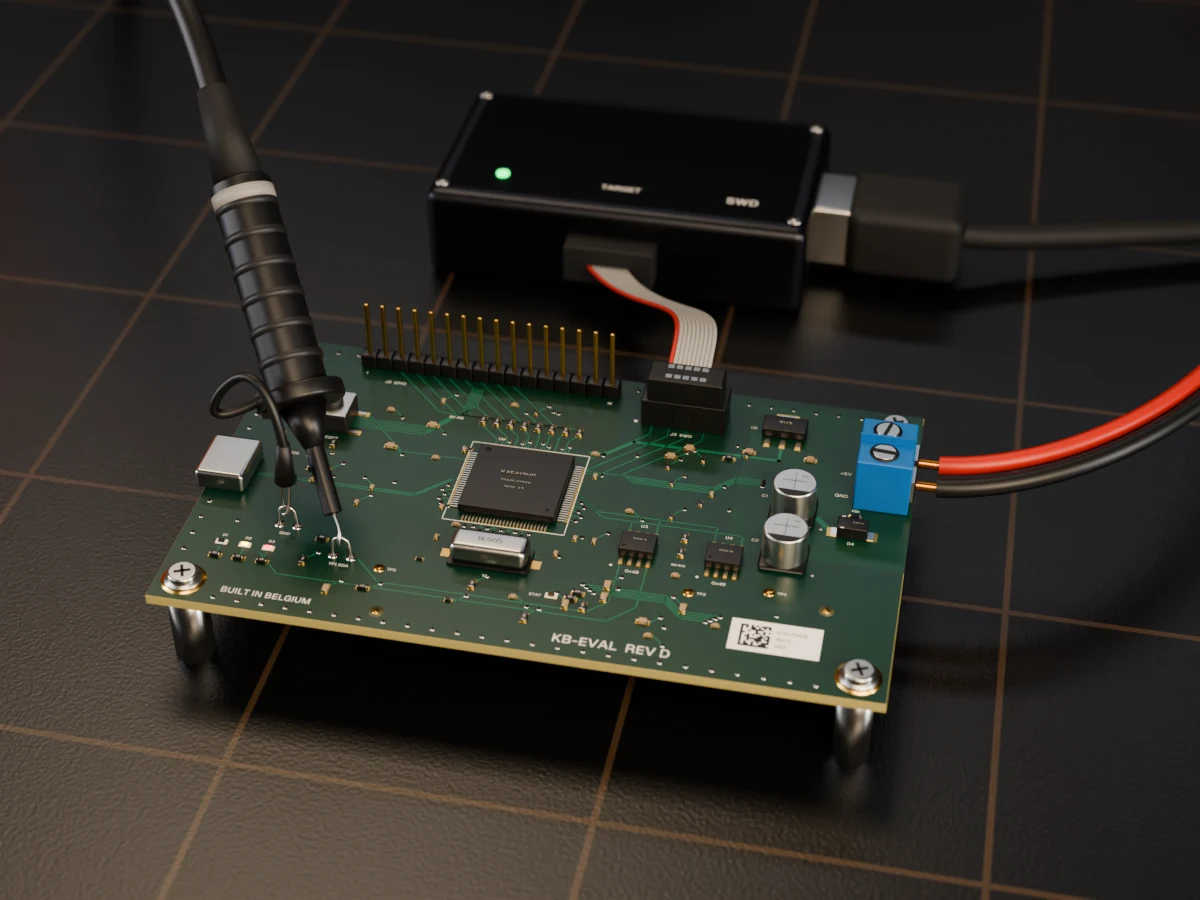
Kilby connects to your lab through a harness and tests hardware in the loop, like an engineer at the bench. An engineer sets the limit on every output, and a request past it is refused.
A test can run for hours without Kilby. He only wakes up when a check fails or the run is done.
APPROVED
Kilby hands in his work. A human engineer reviews it, then you get the pull request.
A coding agent with skills is great with a developer next to it. Skills tell the agent how to work. Kilby also gives it a bench and limits it can't pass, so you can hand over a ticket and walk away.

The agent works in a sealed container. These three ports are the only way out.
We monitor everything the agent does, automatically and with people. If something shouldn't reach the AI provider, we filter it out of the context.
Real power, real measurements, no simulator. An engineer sets the limits, and a request past one is refused.
The platform runs the checks and a human engineer reviews the work. You get a pull request on your own repository. Merging is up to you.
Everything on its way to the agent passes a guard. What you keep back stays outside, even when a piece of it shows up in a build.
What he learns about your product grows in a knowledge graph of its own. Nothing crosses over to other clients.


Our Kilby is named after him, and built in Belgium.
The questions embedded teams ask us first.
Still a question? hi@kilby.be
Firmware for embedded boards, whatever processor is on them. Tell us what you build on when you join the waitlist, and we'll make sure the bench fits your board.
Yes. Kilby works on a bench with your board, a bench power supply and a debug probe. Real power, real measurements, no simulator. How the bench is configured for your board is something we agree on in the pilot.
An engineer sets a limit on every output before Kilby starts. A request past a limit is refused, and the bench switches off.
The agent works on a copy of your repository in a sealed container. Files in your Kilby ignore file are never shown to it. What it does read goes to an external AI model, and we monitor that, automatically and with people. What Kilby learns about your product stays with you and never crosses over to other clients.
No. The agent has no keys and cannot push. The platform runs the checks, a human engineer reviews the work, and you get a pull request on your own repository. Merging is up to you.
Kilby asks on the ticket, like a colleague would, and waits for the answer before it starts. If it gets stuck, it says so on the ticket instead of guessing.
A board, a user for Kilby in your ticket system (Jira, Azure DevOps or OpenProject), access to your repository and a contact person. Join the waitlist and we'll reach out.
Join the list and we'll contact you about a pilot. All it takes: a board, a user in your ticket system, repository access and a contact.
BUILT IN BELGIUM